

Shanxi Jinfeng Biotechnology Co., Ltd. was established on October 30, 2012, with a registered capital of 30 million yuan, covering an area of more than 80 acres. It was located at Xu Village, Huozhou City. It is a scientific and technological innovation enterprise focusing on the research and development, production, sales and terminal services of mineral humic acid series fertilizer products.
-

Sodium humate powder is a kind of water-soluble humic acid salt with strong activity, which can be widely used as feed additive, ceramic synergist and drilling mud water loss reduction agent in
Add to Inquiry -
Plants:For seed dressing, seed dipping and root dipping, using 0.001%-0.05% concentration for significant effect; using as base and chase fertilizer, 0.05%-0.1% concentration, and using with nitrogen
Add to Inquiry -
As farmers and growers, we should pay attention to the use of sodium humate for agricultural use, so that we can contribute to the development of agriculture and people's health.
Add to Inquiry -
Water-soluble sodium humate is a kind of organic humus with multi-functionality and environmental performance, which has a wide range of applications and great value.
Add to Inquiry -
Sodium humate glitter tablet is a very excellent organic fertilizer, which has a wide range of application areas and is an important part of modern ecological agriculture.
Add to Inquiry -
Naturally Weathered Sodium Humate Lignite
Naturally weathered sodium humate lignite is a high quality soil conditioner and fertilizer. It is rich in organic matter and trace elements, and has the function of increasing soil fertility,
Add to Inquiry


Why Choose Us
Our Certifications
Jinfeng Biotechnology Co., Ltd. completed ISO9001:2015 quality management system certification, ISO14001:2015 environmental system certification, GB/T28001-20011 occupational health and safety system certification in 2018, and obtained the national industrial license for organic and inorganic compound fertilizer, laying a solid foundation for enterprise upgrading and transformation.
Production Capacity
Now the production capacity has reached 100,000 tons / year of organic fertilizer granules and 50,000 tons of powder, which has ranked among the forefront of similar enterprises in China, and the company's product sales are oriented to the national market.
Business Philosophy
Since its establishment in 2012, the company has been adhering to the business philosophy of "quality first, reputation first, scientific and technological innovation, high-quality service", continuously increasing product categories, improving production scale, and expanding sales market year by year.
OEM Solutions
The company has the ability to analyze raw and auxiliary materials, finished fertilizer testing, and soil nutrient testing, and can provide farmers with technical consulting services for soil testing formulas.
Specification
|
Type |
Humic Acid |
Fulvic Acid |
Appearance |
Water Solubility |
PH |
|
1 |
40%-50% |
– |
Powder/ Granule |
80%-85% |
9-11 |
|
2 |
50%-60% |
– |
Powder/ Granule/ Flake |
95%-100% |
9-11 |
|
3 |
60%-65% |
– |
Powder/ Granule/ Flake |
95%-100% |
9-11 |
|
4 |
70%-75% |
– |
Flake/ Powder |
100% |
9-11 |
|
5 |
60%-75% |
15% |
Flake/ Powder |
100% |
9-11 |
Sodium Humate - Physico-chemical Properties
|
Molecular Formula |
C9H8Na2O4 |
|
Molar Mass |
226.14 |
|
Density |
1.51[at 20℃] |
|
Melting Point |
>300°C(lit.) |
|
Boling Point |
639.85℃[at 101 325 Pa] |
|
Water Solubility |
Soluble in water (33.3 mg in 1 mL) |
|
Appearance |
Powder |
|
Color |
Black |
|
Storage Condition |
Room Temprature |
|
MDL |
MFCD00135560 |
|
Physical and Chemical Properties |
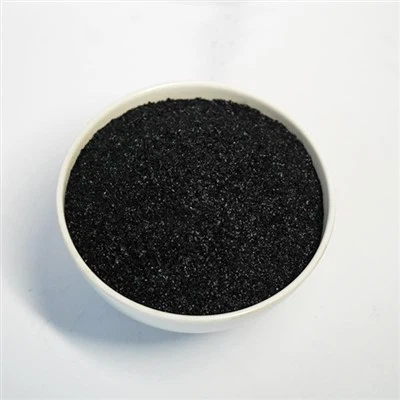
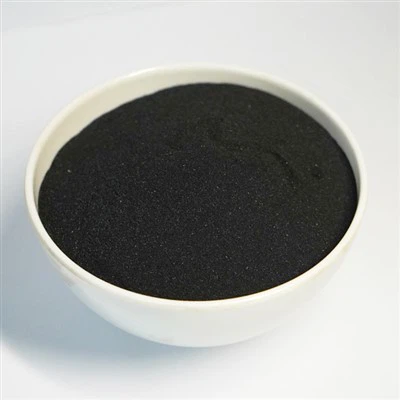
Humic acid sodium, also known as the rich new sodium, humic acid sodium, is the sodium salt of humic acid, black brown or gray black shiny granules or powder, odorless; Soluble in water. Generally, sodium humate is prepared by the action of peat powder and caustic soda solution. In agriculture, sodium humate can be used as fertilizer and plant growth stimulating hormone. It can stimulate the growth and development of crops, improve soil structure and improve the drought resistance of crops. Promote the activation of nitrogen-fixing bacteria. In the industry, sodium humate can be used to increase the capacity of yeast and increase the yield of ethanol. It can also be used as a lubricant and the like. |
|
Use |
Used as fertilizer, plant growth hormone, feed additives, lubricants, drilling aids, etc |
Increase soil fertility: Sodium humate can improve soil organic matter levels, increase soil fertility and help crops grow faster and healthier.
Enhance plant growth: Sodium humate can improve soil structure, increase soil aeration and water retention, and improve plant growth rate and quality.
Improve drought resistance: Sodium humate can improve the drought resistance of crops, allowing them to continue growing under drought conditions.
Multifunctional application: Sodium humate has a wide range of applications in agriculture, medicine and other fields. In agriculture, it can promote plant growth, improve soil structure, increase fertiliser efficiency, enhance plant resistance and improve the quality of agricultural products.
Environmental protection characteristics: As a natural organic substance, sodium humate will not pollute the environment when used in agricultural production, which is in line with the requirements of green development of modern agriculture. Its high efficiency also ensures that crops receive sufficient nutritional support during the growth cycle, improving crop quality and yield.

Organic sodium humate
Organic sodium humate is the salt formed with sodium ions after humic acid has been extracted from natural organic matter. Usually from the high humus content of the soil or organic waste, etc.
Inorganic sodium humate
Inorganic sodium humate is the product obtained from the reaction between synthetic sodium salt solution and humic acid. It is more productive and of more consistent quality than organic sodium humate.
Applications of Plastic Bag Making Mach

Agriculture
Sodium humate can be applied to soil to improve its fertility and increase crop yield. It can also improve the absorption of nutrients by plants, making them healthier and more resistant to diseases.
Animal feed
Sodium humate can be added to animal feed to improve digestion and nutrient absorption, as well as to promote growth and overall health.
Environmental applications
Sodium humate can be used to remediate contaminated soil and water by binding to heavy metals and other pollutants, preventing them from being absorbed by plants or animals. It can also be used as a drilling fluid additive in the oil and gas industry to reduce fluid loss and stabilize wellbore walls.
Other applications
Sodium humate has also been used in the production of ceramics, as a flocculant in wastewater treatment, and as a binder in the manufacture of fertilizer pellets.
High water solubility: Easily dissolves in water, making it convenient to apply in various forms like foliar sprays or soil drenching.
Chelating agent: Can bind to heavy metals and other minerals in the soil, making them more readily available to plants.
Soil conditioner: Improves soil structure by enhancing water retention capacity and promoting better root development.
Nutrient uptake enhancer: Helps plants absorb essential nutrients from the soil more efficiently.
Plant growth stimulant: Can promote seed germination and overall plant growth.
Appearance: Typically appears as a dark brown or black powder.
Anti-inflammatory potential
Shows potential for reducing inflammation in both plant and animal systems.
Naturally derived
Considered a safe and environmentally friendly option as it comes from organic sources like peat and lignite.
Detoxifying properties
In animal feed, sodium humate can bind toxins and heavy metals in the digestive tract, protecting the animal's health.
Our Certificate


Package
25kg woven bags with inner liner.
01
Color printing PP bags with inner liner or PE bags.
02
1MT,1.1MT jumbo bags with discharge hole.
03
Could also provide according to customer’s requirement.
04
Usage
1kg, 5kgs, 10kgs printing aluminium foil bag + 10kgs, 20kgs printing carton box.
01
20kgs/25kg woven/paper bags with inner liner.
02
20kgs/25kg color printing PP/PE bags with inner liner.
03
1MT,1.1MT jumbo bags with discharge hole.
04
According to customer’requirement.
05
FAQ
We're well-known as one of the leading sodium humate manufacturers and suppliers in China. We warmly welcome you to buy high quality sodium humate for sale here from our factory. For price consultation, contact us.
Agricultural Sodium Humate, Sodium Humate Tablets, Water soluble Sodium Humate